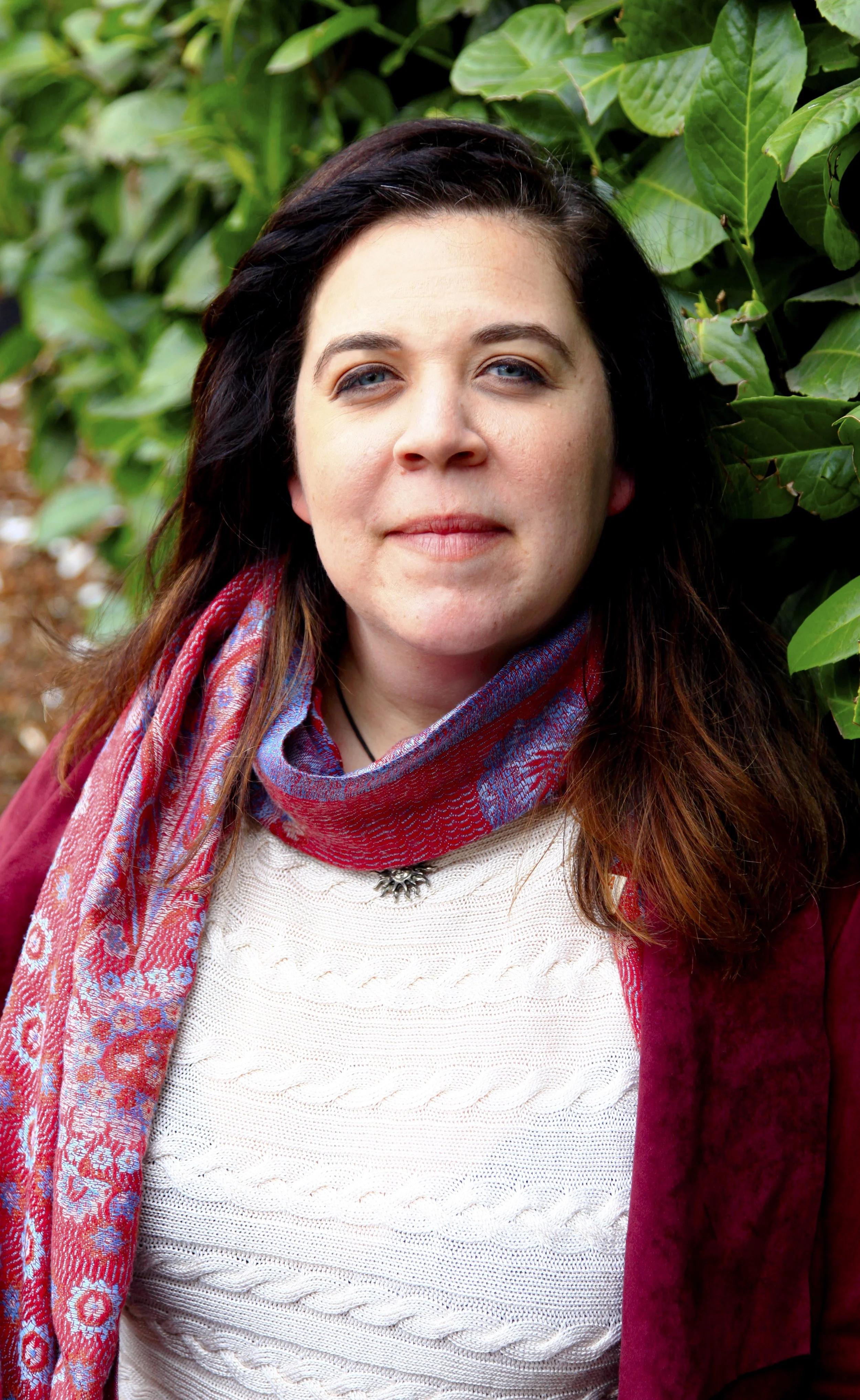
Hi, I’m Miranda
I’m a political strategist, civic educator, and organizer with nearly two decades of experience across theory, institutions, and lived reality.
I’ve worked inside politics, outside politics, and at its edges — learning where it fails, who it excludes, and what it asks people to pretend isn’t happening.
This campaign grows out of that lifetime of preparation — and a willingness to be honest about what leadership actually requires.
Candidate Bio
Miranda Weigler is a lifelong political thinker — not in the sense of holding office for decades, but in the sense of having been shaped, from the beginning, by how power, policy, and people actually interact.
Politics has always been part of her life. Her family history includes local public service, and her parents met through political work. From an early age, she understood politics not as abstraction, but as something lived — something that shapes housing, work, family stability, and who gets heard.
Miranda studied international relations and political sociology, and early in her career she helped build an organization at Colgate University dedicated to political arts and democratic education. Her academic work focused on the social foundations of political systems — particularly the tension between human dignity and the American belief that worth can be earned or lost through market success.
For a long time, she assumed her path into politics would look traditional: years of hierarchy, party infrastructure, and institutional advancement. Instead, she chose a different route — deliberately.
Why Cannabis
Miranda entered the legal cannabis industry believing it could serve as a bridge between business and politics: a regulated market designed to correct past harm, create opportunity, and test whether government could build a functional system from the ground up.
She also believed — candidly — that building financial independence outside traditional political pathways might make it possible to engage in public life without spending decades “waiting her turn.”
What she found instead was instructive.
The evolution of the cannabis industry revealed how regulation often protects incumbents and the status quo, how enforcement replaces deliberation, how policy complexity favors bad actors over ordinary people, and how government leaders frequently misunderstand — or fail to engage with — the systems they regulate. While some principled operators continue to fight to survive, many of the ‘profits’ flowed to those best positioned to exploit loopholes, absorb risk, or ignore the rules altogether.
That experience gave Miranda an unusually clear view of why so many people feel alienated from government: policy is often designed far from lived reality, implemented without feedback, and defended long after it has stopped working.
Cannabis didn’t make her cynical about politics. It made her more precise.
A Nonlinear Political Life
Miranda’s career has moved across consulting, communications, strategy, and organizational development, working inside and alongside institutions rather than climbing a single ladder. That path gave her fluency in how decisions are actually made — and why good intentions so often fail to produce good outcomes.
She has spent years helping organizations articulate problems clearly, design solutions around human limits, and evaluate whether systems are serving their stated goals. That coaching framework — problem → solution → mechanism — deeply informs how she thinks about public policy.
Why This Moment
Miranda always assumed she would run for governor one day. She did not imagine it would be now, or that it would take the form it has.
Today, she is a single mother raising young children, supported by family to remain housed, and reliant on the state for healthcare and food assistance. Rather than disqualifying her from public leadership, she believes this places her squarely inside the reality most Oregonians are navigating.
She knows firsthand how fragile stability can be — and how much of modern politics treats that fragility as a personal failure rather than a policy problem.
This campaign is both serious and deliberately unconventional. It is a form of civic education, political critique, and public conversation designed to expose why so many people feel politics no longer speaks to them. It is also an argument that dignity should not be conditional on productivity, perfection, or compliance with an increasingly unlivable system.
Miranda is not running because she believes she has all the answers. She is running because she believes we are asking the wrong questions — and because Oregon deserves a politics that starts from honesty, care, and human dignity.
A collection of projects, past, present, and future
-
![Logo with the words 'The Game' arranged in a grid, with 'The' in orange handwritten above the letters G, A, M, E inside squares.]()
The Game
-
![Person writing notes on sticky notes arranged on a dark gray wall in a modern office, with shelves filled with binders, plants, and decorative items, and hanging Edison-style light bulbs.]()
Democratic Resource Centers
-
![A neon sign with the words "WE LOVE Legal DRUGS" in blue, green, and pink colors.]()
Cannabis Legality and the Integration of Markets
-
![Gold and black graph with upward trend line and pie chart overlay]()
Little House Inns
-
![Logo for Portland COC with the text 'Cook Your Own Cannabis' and the acronym 'C Y O C' in the center, featuring stars above and below.]()
Little House Foods
-
![Book cover titled "Willamette Heights Chronicles, 3rd Edition" with a sepia-toned photo of a road lined with trees.]()
Willamette Heights Chronicles